Is Everything a Cult? What Cult Psychology Explains About Why We Stay
Is Everything a Cult? What Cult Psychology Explains About Why We Stay
If you’ve ever wondered whether everything is starting to feel a little culty, you’re not imagining it. Cult psychology isn’t just about fringe groups in documentaries. It explains why smart, capable people stay in jobs they hate, defend belief systems that no longer fit, and feel weirdly loyal to things that quietly stopped serving them a long time ago.
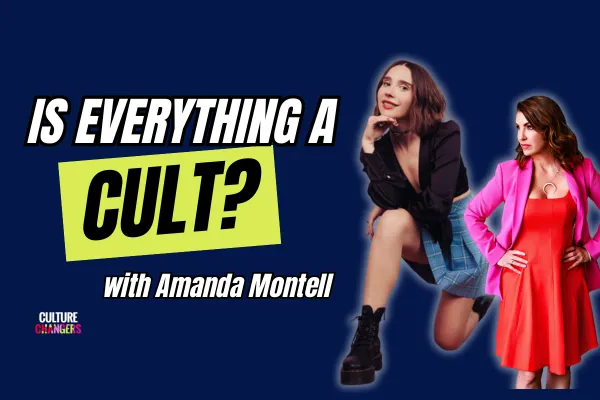
I sat down with linguist and bestselling author Amanda Montell, and the conversation didn’t make me paranoid. It made things clearer. Especially around how language influences belief and why leaving anything, not just a cult, can feel so disorienting.
Let’s talk about what’s actually going on.
Why We’re So Obsessed With Cults Right Now
Most people think we watch cult documentaries out of shock or morbid curiosity. That’s part of it, sure. But there’s something deeper happening.
When we watch those stories, we’re really asking one question:
Would I have fallen for that?
And the uncomfortable answer is usually… maybe.
Cult stories work because they let us look at influence, power, and control from a safe distance. We get to point and say, “That could never be me,” while quietly checking our own blind spots. Jobs. Relationships. Wellness spaces. Political identities. Even friend groups.
Cult psychology shows us that it’s rarely about intelligence. It’s about timing, language, and emotional vulnerability.
Language Does More Work Than Facts
One of the biggest takeaways from my conversation with Amanda was this: language shapes belief more than facts do.
Facts require effort. Language sneaks in sideways.
Certain phrases don’t invite discussion. They shut it down. Psychologists call these thought-terminating clichés. You’ve heard them before:
“It is what it is.”
“Just trust the process.”
“Do your own research.”
“That’s a victim mindset.”
They sound harmless. Sometimes even comforting. But their job is to stop curiosity. Once a phrase ends the conversation, the belief stays intact.
This is why language matters so much in cult psychology. Control doesn’t always look aggressive. Sometimes it sounds calm, reasonable, and confident.
The Bias That Keeps Us Stuck Way Too Long
Let’s talk about the sunk cost fallacy, because this one hits home for a lot of people.
The sunk cost fallacy is the belief that because you’ve already invested time, money, energy, or identity into something, you should keep going. Even when it’s clearly not working.
“I’ve already been here ten years.”
“I’ve put too much into this to walk away now.”
“I don’t even know who I’d be without it.”
This bias shows up everywhere. Careers. Relationships. Belief systems. It’s one of the main reasons people stay in actual cults, but it also explains why reinvention can feel so scary.
Walking away doesn’t just mean change. It means admitting the old story is over. And that’s a hard thing for the brain to do.
There’s a Cult for Everyone
This was one of the most grounding ideas from the conversation: there’s a cult for everyone.
That doesn’t mean everything is dangerous. It means influence shows up in familiar places. Community, ritual, shared language, and belonging aren’t bad things. They’re human things.
Problems start when questioning becomes taboo. When language replaces thinking. When belonging requires silence.
Not every group is a “get out now” situation. Some are harmless. Some are “watch your back.” The key is noticing when curiosity disappears.
Pop Culture, Belief, and the Halo Effect
Another piece of cult psychology that shows up everywhere is the halo effect. That’s when we assume someone is good, smart, or trustworthy in all areas because we admire one thing about them.
We like their work. Their voice. Their confidence. So we assume the rest.
This is why pop culture figures, influencers, and even leaders get elevated so quickly. And why the fall feels so dramatic when they disappoint us. We didn’t just admire them. We projected onto them.
Pop stars didn’t replace religion by accident. Humans look for meaning, symbols, and stories. We always have.
The Real Question to Ask Yourself
The most helpful shift for me wasn’t asking, “Is this a cult?”
It was asking:
Can I question this freely?
Can I leave without punishment?
Does the language invite thinking or replace it?
Those questions apply to work, relationships, communities, and belief systems. They’re not about judgment. They’re about awareness.
Understanding how language and bias work gives you a pause button. And sometimes that pause is enough to choose differently.
If you want to go deeper into this conversation, I unpack all of this and more with Amanda Montell on the podcast, including why we’re so obsessed with cult stories right now and how to spot cultish dynamics before they take root.
Listen Now: The Culture Changers Podcast
Watch Now: Culture Changers on YouTube
If you’ve got a podcast or an idea that won’t leave you alone, here's your sign to take it seriously. Not just because it's fun (it is), but because it can change how people see you, connect with you, and trust you. That's the magic.
And if you're wondering how to make it actually work? Book a free clarity call with me at allisonhare.com/freecall. I'll help you turn that idea into a tight, bingeable, client-attracting machine.